Eco-anxiety is real and it is time Ireland took it seriously
Young people across Ireland are naming eco-anxiety as a real part of daily life. Their fear is heavy, but it is also driving connection, care and action.
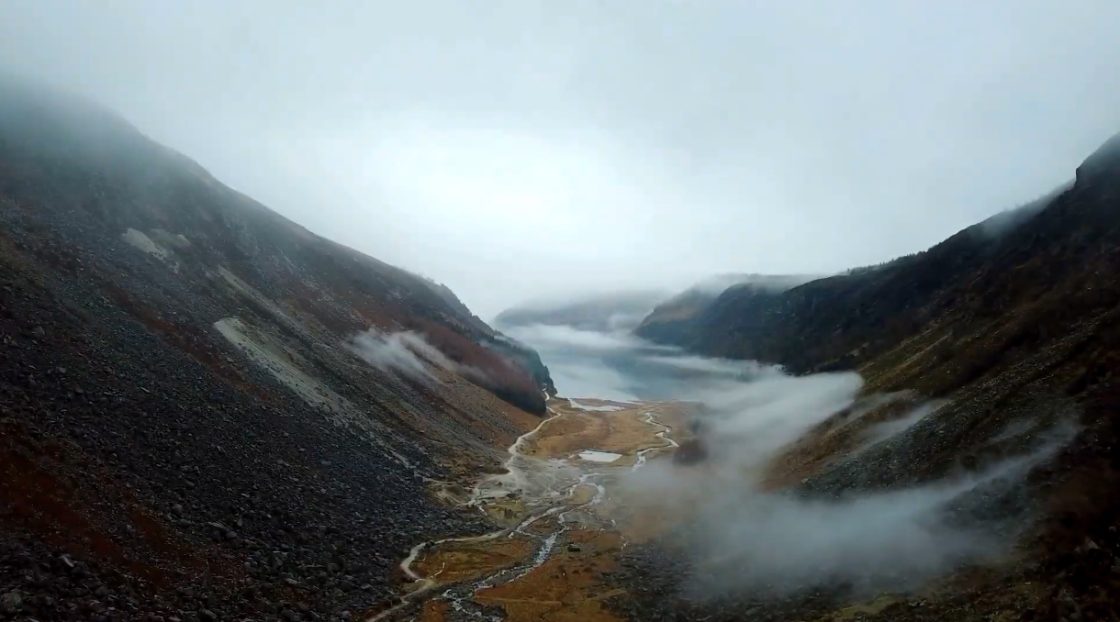
Last month, thousands of people marched through Dublin city centre calling for climate justice. It was cold, rainy and loud, but above all, it was determined. From the Garden of Remembrance to Molesworth Street, signs read “People and nature before big polluters.” Chants rose for affordable homes, clean energy and climate action. For many of those young feet on the streets, tending placards or pushing bikes through city traffic, their anger and hope came from a place of deep care and from fear.
This fear is real, and increasingly common. It has a name: eco-anxiety. It describes the emotional impact of climate change, including worry, grief and despair that many young people now carry with them daily. Studies show eco-anxiety is not only widespread but also closely linked to mental health and civic engagement.
I recently worked on a short documentary, ‘Embrace and Act: Living with Eco-Anxiety’, that puts eco-anxiety at the centre of the story told through the voices of young people living in Ireland and grounded in expert insight. It is a film about fear, resilience and action.
What is eco-anxiety, and why now?
As psychotherapist Matthew Henson outlines, eco-anxiety is not a sign of weakness or a sign of being overly sensitive. He warns against dismissive labels like “histrionic imagination” or “snowflake generation.” For him, eco-anxiety is a legitimate response to a real crisis. “It is a legitimate concern about the state of the planet,” he says, naming climate change, wars and environmental devastation.
Research continues to show what happens when those concerns go unacknowledged. A recent large review found that eco-anxiety is linked to higher rates of psychological distress, depression and stress symptoms. At the same time, newer work suggests that for many young adults, experiencing eco-anxiety increases the likelihood of pro-environmental action.
In short, eco-anxiety is real. It can feel heavy, but it can also be a source of strength.
Ireland’s lost conversations
In Ireland, climate change is often debated in abstract terms like carbon budgets and emissions targets. What gets lost in that debate is the emotional weight carried by a generation facing storms, floods, and uncertain futures. That weight does not disappear when the debate ends. It surfaces as stress, despair, sleepless nights and a sense of being alone.
That is why the documentary leans into stories rather than statistics. We spoke with young people studying, working, and caring for the climate. People who talked about grief for lost winters, their fear for children they hope to have one day, and their frustration that feelings about the environment are seen as a personal problem. These are not isolated feelings. These are shared, and they are urgent.
From fear to community to action
In the film, some young people spoke about what helps. Small acts: cycling instead of driving, connecting with nature, talking with friends, joining community spaces where climate concern does not feel like a burden but a bond. Others described activism and community organising as sources of solidarity and hope. That echoes what Matthew Henson argues is most important: acknowledging the feelings, giving ourselves and each other permission to feel without shame, and then choosing connection over isolation.
These actions matter, and recent research backs it up. People who report higher climate anxiety are more likely to engage in sustainable behaviours, vote on climate issues and participate in grassroots activism.
In bringing together individual stories, professional insight and community momentum, the film does not end in despair. It points toward possibility: healing, solidarity and collective action.
What the march showed and what is next
Last month’s march was proof. The rain-soaked streets, the chants, the banners were not just symbolic. They were a statement. We may be afraid. But we are not alone. We will act together.
Eco-anxiety is not a problem to be hidden. It is a reality to be named and addressed. And as long as young people in Ireland feel this, our stories, our fears, and our hopes deserve space. They deserve change.
With this documentary, we hope to open that space. We hope to show the human face behind climate statistics and inspire compassion, understanding and action.
If you felt uneasy when you heard about the march, or worried about the lack of progress, or stayed awake thinking about what the future might hold, you are not alone. This is not hopeless. It can be a turning point.
Fear can hurt. It can also move us.
Fatima Ismail is one of Ireland’s UN Youth Climate Delegates and host of spunout’s new documentary ‘Embrace and Act: Living with Eco-Anxiety’ available to stream tomorrow on YouTube.
Feeling overwhelmed and want to talk to someone?
- Get anonymous support 24/7 with our text message support service
- Connect with a trained volunteer who will listen to you, and help you to move forward feeling better
- Whatsapp us now or free-text SPUNOUT to 50808 to begin.
- Find out more about our text message support service
If you are a customer of the 48 or An Post network or cannot get through using the ‘50808’ short code please text HELLO to 086 1800 280 (standard message rates may apply). Some smaller networks do not support short codes like ‘50808’.
Related articles
- Climate
- Factsheet
Changing the way we talk about the climate
Written by: spunout
SpunOut.ie are introducing new style guidelines for the way we talk about the climate crisis
- Climate
- Factsheet
9 facts about climate change
Written by: spunout
Learning the facts around climate change allows us to start a conversation on what we can do to tackle it
- Climate
- Factsheet
5 tips for talking about the climate crisis
Written by: spunout
Confronting the scale of the climate crisis can be overwhelming and frightening and we may prefer to avoid talking about it
Our work is supported by