What your LGBTI+ friends wish you knew
Kyle talks about his coming out experience and how you can support a friend going through the same thing.

Looking back, the fear I had when I was considering coming out a little more than a two years ago seems stupid. What wasn’t stupid was the anxiety and pain that one small act brought upon myself. Panic attacks, low self confidence, sleepless nights and so much more I experienced when weighing up the decision to come out or not. To utter those three small words to someone was my biggest challenge.
Finally I plucked up the courage to tell one of my closest friends on the day before New Year’s Eve 2013. With one simple declaration from my friend all my fears evaporated away “its fine pal, it doesn’t make a difference to me”. Eventually I found my confidence grow and I began to tell more people. Like with everything in small town Ireland word got out and everyone knew.
I prepared for the worst but in reality I was met with kind words and open arms. It seemed that my fellow members of society accepted me without much distress. However I began finding myself coming up against a new challenge after coming out. People had questions, many of which I welcomed, however it was the ignorance and complete lack of understanding that really baffled me.
I welcome people to ask me questions. That is usually how most people learn, but there are some things that people should just have common sense for. I have thus made it my mission to break down many of the misconceptions and stereotypes surrounding gay people. So I’ve done all the hard work for you and made a list of all the do’s and don’ts that you can ask your gay friends and family members.
Support your friend
- Be supportive if they come to you for relationship advice.
- Treat them the same way you would treat any other friend.
- Show your support by attending LGBTI+ events such as Pride if they’re important to your friend.
Challenge homophobia
- Speak up if someone is experiencing homophobic abuse.
- Call out homophobic comments or behaviour when you see them.
- Correct people if they use inaccurate or offensive language.
- Make an effort to stop using derogatory words that could cause offence.
Learn and educate yourself
- Ask respectful questions about LGBTI+ topics if you want to learn more.
- Share accurate and supportive information about LGBTI+ issues online.
Avoid making assumptions
- Don’t ask someone if they’re “sure” they’re gay.
- Don’t suggest that being gay is “just a phase”.
- Don’t assume there has to be a “girl” or a “boy” in a same-sex relationship.
- Don’t tell someone they don’t “look gay” or “sound gay”.
Avoid stereotypes and harmful language
- Don’t ask someone to be your “gay best friend”.
- Don’t describe something as “gay” as an insult.
- Don’t say that being gay is a lifestyle choice.
Feeling overwhelmed and want to talk to someone?
- Get anonymous support 24/7 with our text message support service
- Connect with a trained volunteer who will listen to you, and help you to move forward feeling better
- Whatsapp us now or free-text SPUNOUT to 50808 to begin.
- Find out more about our text message support service
If you are a customer of the 48 or An Post network or cannot get through using the ‘50808’ short code please text HELLO to 086 1800 280 (standard message rates may apply). Some smaller networks do not support short codes like ‘50808’.
Related articles

- Getting Help
- Factsheet
5 signs that you may need mental health support
Written by: spunout
There are times in your life where you may require mental health support to help you cope with challenges you may face
- Anxiety & Stress
- Factsheet
10 tips for dealing with stress
Written by: spunout
Learn how to identify what might be causing you stress and what you can do about it.
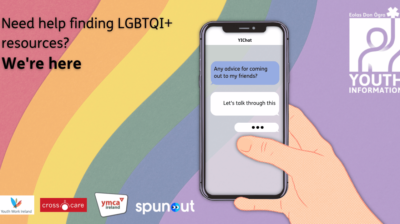
Are you looking for information, advice or guidance about LGBTQI+ issues? Get answers to your questions through the Youth Information Chat service.
Some of the questions people ask us include: My friends keep using the wrong pronouns for me, any advice? My best friend came out, how can I best s...
Our work is supported by